Skip to Content

The Top 10 Closed Lakes in the World

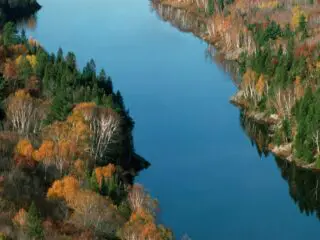
A breathtaking top-view of Snakeskin lake Ontario.

Before we dive into the best closed lakes in the world, let’s get on the same page regarding what we mean by a “closed lake.” Closed lakes are defined as endorheic basins with no surface outlet. Essentially this means that a “closed lake” is a lake that does not drain into a larger body of water.

These lakes can be found all over the world in a variety of climates and locations.  The ten largest closed lakes by surface area are all listed above.

1. Great Salt Lake- Utah, USA

A breathtaking view of salt lake.

The Great Salt Lake in Utah, USA, is the largest closed lake in the world with an area of 1,700 square miles, approximately

Fun Facts about the Great Salt Lake:

  • It is up to ten times saltier than the ocean
  • The Great Salt Lake has no fish
  • It is home to the brine shrimp

Things to do at the Great Salt Lake:

  • Visit Antelope Island State Park
  • Hike Frary Peak
  • Take a dip in the brine pool

2. Caspian Sea- Azerbaijan, Russia, Kazakhstan, Iran, Turkmenistan

A dry caspian sea.

The Caspian Sea is the second largest closed lake, with an area of approximately 143,200 square miles. The Caspian Sea is located between Europe and Asia and is bordered by Azerbaijan, Russia, Kazakhstan, Iran, and Turkmenistan.

Fun Facts about The Caspian Sea:

  • The Caspian Sea is a lake, despite its name
  • It contains about 16% of the world’s oil reserves
  • The Caspian Sea is home to the sturgeon fish, which is used to make caviar

Things to do at The Caspian Sea:

  • Visit the Caspian Sea Beaches
  • Go Sturgeon Fishing
  • Explore the ancient city of Derbent

3. Lake Superior- Ontario, Canada

A beautiful lake superior ontario canada.

Lake Superior is the biggest of the Great Lakes of North America and the third largest closed lake in the world, with an area of 31,700 square miles. Lake Superior is located between the Canadian provinces of Ontario and Minnesota.

Fun Facts about Lake Superior:

  • It is the coldest and deepest of the Great Lakes
  • Lake Superior contains 10% of the
Read the rest of the story.
Read More about The Top 10 Closed Lakes in the World

How Long Do Most Lakes Last?

Braies lake with boat.

There are virtually endless awe-inspiring sights to see and take in around the world. With no shortage of wonders on planet Earth, it is no surprise that more people than ever have found a passion for all things Earth and science. For those who study geology and the waters of the blue planet, you may be curious as to how long a typical lake lasts.

The very idea of a lake disappearing may sound foreign or even impossible to you, however, if you are not familiar with the formation and evolution of lakes, rivers, and other Earthly bodies of water over time.

Some lakes may last only a few decades in regions with severe climate change and a lack of government resources to help replenish the lakes as they dry up. However, with the natural life cycle of a lake in a thriving and suitable environment, lakes can last anywhere from hundreds to thousands of years. 

Do all lakes last the same amount of time?

A breathtaking view of natural lake.

No. Not all lakes will last the same amount of time, as climates shift and change around the globe all of the time. Because there are many factors at play that help determine how long a lake may last naturally, there is no easy way to set an average time that a lake will last.

Lake Formation

A natural lake formation with busy cruise ships.

In order to understand why lakes do not last the same amount of time, it is important to understand how lakes are formed and what exactly defines a lake. A lake is a basin in the Earth that is suitable for water collection and/or accumulation. Basins throughout the Earth’s surface make for excellent lakes, streams, and rivers.

Many glaciers around the world are also known to have helped in the formation of the lakes we know today after they have completely melted. Other instances of lake formations may occur due to the Earth’s own crust and plate tectonics. As plate tectonics shift, the Earth’s crust and ground may pull apart, helping to form natural holes and basins which are suitable for lake water … Read the rest of the story.

Read More about How Long Do Most Lakes Last?

Which Countries Have No Forests?

A man walking through the desert.

There are five treeless countries, or more appropriate, countries without forests in the world, according to World Bank data. One is truly hilarious, Greenland since the name would make us easily think it is filled with lush greenery. Anyway, the other four treeless territories are Monaco, Oman, San Marino, and Qatar.

So, if countries with trees are struggling with climate issues, what about those without them? How is it possible for a country to not have trees? Even deserts have a few, or so I thought since some deserts are too dry to have any trees at all that thrive there.

Let’s look at what scientists have to say, then analyze these countries individually.

Nations With Less than Percent Tree Cover

There are several countries that the World Bank states as having less than a percent of tree cover, including:

  • Oman
  • Greenland
  • Qatar
  • San Marino
  • Monaco
  • Nauru
  • Egypt
  • Libya
  • Djibouti
  • Mauritania
  • Kuwait

What is Considered a Forest?

A top view of a forest loaded with tall trees.

Forest area is defined as land with trees taller than five meters and a canopy cover of at least ten percent, or trees that can achieve these thresholds in situ, covering an area larger than 0.5 hectares. Agricultural and urban land uses are not included in this calculation. Both the existence of trees and the lack of other major land uses contribute to the definition of a forest.

Ideally, the trees must be capable of growing to a height of at least 5 meters. As a result of human intervention or natural calamities, areas that have not yet attained but are predicted to reach 10% canopy cover and tree heights of at least 5 m are included in the study.

Inclusions

Plantations are mainly used for forestry or protection, as long as they meet certain height and canopy cover requirements, like those found in nature reserves, national parks as well as those found in areas of special scientific, historical, cultural, or religious interest. Shelterbelts,  windbreaks, as well as corridors of trees with an area larger than 0.25 ha and a width greater than 20 … Read the rest of the story.

Read More about Which Countries Have No Forests?

Lake Turnover: What Is It and Why Does It Happen?

A man throwing his fishing nets in the sea.

Imagine that you’re a fisherman who likes to spend his days on the lake. You’ve seen the turnover occur a few times and have been wondering if it’s killed any fish in the area. You’ve also heard that it can have some pretty severe effects on fish populations, so you’d like to learn more about it.

In this article, we’ll discuss what lake turnover is, why it happens, and what its effects are on fish populations.

What is Lake Turnover?

Beautiful lake landscape with a boat of fisherman.

Lake turnover is an important process that happens in all bodies of water. It plays a crucial role in the health of aquatic ecosystems and can have a significant impact on fish populations. According to National Geographic, lake turnover is the process by which a body of water renews itself.

It occurs when the warmer, lighter water at the surface of the lake mixes with the colder, denser water at the bottom. This process is known as convection, and it happens in all lakes on a regular basis.

Why Does Lake Turnover Happen?

Lake turnover happens for a few reasons. The first is that it helps to oxygenate the water. As the warmer, lighter water at the surface mixes with the colder, denser water at the bottom, it brings oxygen down from the surface and circulates it throughout the entire lake.

This is important because it helps to keep the water clean and habitable for aquatic life. Another reason why lake turnover happens is that it helps to regulate the temperature of the water. As the colder, denser water from the bottom of the lake mixes with the warmer, lighter water at the surface, it helps to even out the temperature of the entire body of water.

This is important because it prevents the water from becoming too cold or too warm, which can be harmful to fish and other aquatic life. Finally, lake turnover helps to clean the sediment that has accumulated at the bottom of the lake. As the water mixes, it brings the sediment up from the bottom and circulates it throughout … Read the rest of the story.

Read More about Lake Turnover: What Is It and Why Does It Happen?

How Long are Palm Tree Roots?

A palm tree with sky background.

Nothing makes you think about a tropical island getaway or vacation in the sun like the presence of palm trees.  I remember the enthusiasm I displayed on my first trip to the beach.  We knew our destination on the sands, and a beautiful body of water was near because the scenic route was lined with tall palm trees like a wall on either side of the highway.

Ironically, palm trees can reach heights of 75 feet or more and have root systems that grow no more than 3 feet deep.  The roots usually grow horizontally rather than vertically during its period of growth.  In addition, palm tree roots remain in that precarious state as the tree grows taller, contrary to how we see other large tree root systems grow.

For instance, many would believe that as a tree grows above ground, the root system would grow similar to it in depth below the soil.  Like a 50-foot-tall tree having roots just as deep and wide from the tree’s trunk down into the ground.  On the contrary, you can find palm trees well over 60 feet tall with much shorter roots than that.

Yet they are strong and powerful trees, able to withstand the toughest of weather conditions.

How do palm trees survive such severe storms and hurricanes with short roots?

Strong winds blowing a palm tree fronds.

Plant ecologist Dan Metcalfe states that palm trees have three features that help them overcome the dreadful conditions of cyclones, tsunamis, and even hurricanes.

1. Its Fibrous Roots

Fibrous root system close up.

With such shallow root systems, many wonder how palm trees survive such harsh storm systems.  Hurricanes, typhoons, and tornados are no joke as they usher in winds over 100 miles per hour at times.  Yet, after many storms, the palm tree is one of the few things left standing.

Palms have a fibrous tree root system.  That means its roots adapt in such a way that they branch out in a pattern that enables it to maximize nutrient and water absorption. Its root system has many short roots that spread across the soil’s upper level.… Read the rest of the story.

Read More about How Long are Palm Tree Roots?

How Long are Oak Tree Roots?

A macro shot of long oak tree roots.

Mother Nature has provided mankind with so much wonder and curiosity for all of recorded history. It seems that we just can’t help but look around at the planet that surrounds us and be awed. One thing that brings home much of this joy and wonder are the trees that we see.

Oak trees are particularly interesting to a lot of people because of their strength and ability to grow in most parts of the world. When looking at and examining oak trees for all that they are, we cannot forget that they are very much in need of having strong roots that keep them grounded and allow them to do what they need to do. In other words, we should try to be respectful of how oak trees grow and why it matters for the world that we want to live in.

Oak Tree Roots

Old oak tree on a green meadow.

The roots of an oak tree are very important to its ability to survive and grow. Despite this, oak tree roots are only about 18 inches beneath the surface of the Earth. This is not just a fun fact that you should know, but it is something that plays an integral part in the life of an oak tree and how it manages to survive in nearly all weather conditions.

It keeps its roots near the surface so it can draw in moisture even when there is very little to come by. This is part of the reason why oak trees have been so successful at growing and surviving no matter where they are found on the planet. An important thing to understand about oak trees is that their root system can also be something that works against them.

They have their roots so close to the Earth that they may struggle if there is pavement or some other obstructor that gets in their way. This is a known fact about oak trees, and it may be a reason why a particular oak tree is not able to survive under certain conditions. If you notice that there is … Read the rest of the story.

Read More about How Long are Oak Tree Roots?

How Long are Redwood Tree Roots?

A narrow pavement with gigantic redwood trees.

Depending on the variety, redwood tree roots can extend out for more than 100 feet. California or coast redwoods, giant sequoias, and dawn redwoods are nature’s three forest giants. I’ll never forget the classic scene in Alfred Hitchcock’s Vertigo where Madeleine (Kim Novak) and Scottie (Jimmy Stewart) are virtually dwarfed by the “Father of the Forest” sequoia.

What gives these trees such amazing growth potential and the ability to live for thousands of years? Let’s get to the root of this question together.

Roots – Going The Distance

Redwood trees in sequoia national forest.

Redwood tree roots grow out, not down like other trees. You’ll find these systems extending only six to twelve feet deep, often with the bulk of the growth closer to three feet beneath the soil’s surface. At a glance, such shallow growth might not seem like it can support forest behemoths that can grow between one hundred and fifty and three hundred feet tall.

No Taproot Needed

Redwood forest with sunshine pouring through.

Unlike the thick taproot that becomes a carrot or the sometimes frustratingly long ones that support a dandelion, redwood seedlings don’t rely on these central, deep-diving anchors. That’s because their shallow root systems are able to get water and oxygen nearer to the surface of the soil where they grow.

How Do Redwoods Get Water?

Did you know that redwoods can make their own rain? Shallow roots mean these trees need a lot of moisture. Sure, groves along the California and Oregon coasts can count on winter rains, but they also “comb” fog during the summer months – collecting moisture on hanging branches and leaves and dripping it onto the soil.

According to plant ecologist Todd Dawson, these trees get between one-fourth and one-half of their water this way. If that isn’t cool enough for you, terpenes released from their leaves can also help condense moisture, creating cooling clouds.

It Takes A Grove To Grow A Redwood

Plenty of redwood trees.

You’ve probably heard plenty of quotes and anecdotes championing the benefits of deep roots (any Tolkien fans out there?). Redwoods show us the advantages of shallow but … Read the rest of the story.

Read More about How Long are Redwood Tree Roots?

How Long are Tomato Roots?

Cropped female hand holding a water propagation of tomato plant.

Tomatoes (Solanum lycopersicum, Lycopersicon lycopersicum) grow up to 3 feet long depending on which root system they have. I’ve always planted tomatoes in my garden after turning about one foot or more of the soil over with a pitchfork. I know, I’m pretty old school about that.

I find that the tomato taproots grow deep and develop healthy root systems this way. If you want to plant tomatoes but don’t have room for a garden, you can plant them in containers or raised beds. You just need to make sure you have enough depth for the tomato roots to grow long.

Learn more about how long tomato roots grow and the types of root systems they have. This will help you grow healthy plants and tomatoes.

What Root System Do Tomato Plants Have?

Transplanting tomato plant with root system.

Tomato plants can have two different types of root systems. One is a taproot system and the other is a fibrous root system. It’s important to know the difference if you’re growing tomatoes in your garden, raised beds, or pots.

Whether the tomato plant has a taproot or a fibrous root system depends on how it was germinated. If it grows from a seed, it develops the taproot. Plants that grow from cuttings develop a fibrous root system.

What Are Taproots?

A taproot is a large, central root. It is longer and wider than the lateral roots that grow off of it. Taproots grow deeper into the soil than fibrous roots.

Since they’re so deep, they can hold the weight of large tomato plants.

What Are Fibrous Roots?

Fibrous roots are thin and stringy. They branch out and form a complex web of roots that stay near the topsoil. They look like fuzzy clumps of root hairs.

These fine roots provide nutrients, moisture, and air circulation for your tomato plants. If you notice small bulbs on the ends of the roots, they’re for storing nitrogen.

Why Do Tomato Roots Grow to Different Depths?

A farmer planting tomatoes in his lawn.

When you plant different tomato varieties, you’ll see that their roots develop differently. Some … Read the rest of the story.

Read More about How Long are Tomato Roots?

How Long are Pine Tree Roots?

A long and beautiful pine tree.

Pine trees are popular for landscaping because of their beautiful, evergreen needles and sturdy branches. Besides being attractive additions to any property, pine trees have many practical uses. For example, they can provide shade from the sun in the summer or a windbreak during the winter months.

They also produce cones that make beautiful decorations. However, even with all these benefits, there is one downside: if you don’t care for the roots properly, your tree won’t flourish.

What Are Pine Tree Roots and What Do They Do?

Pine tree roots in dune zone.

Pine tree roots grow deep into the soil, searching for water and nutrients. They also anchor the tree in place and help to store food reserves. The length of a pine tree’s roots can vary depending on the soil type.

The deeper the soil, the longer the roots will be. Most are about five to twenty feet, depending on the size and age of the tree. However, in dry or sandy soil with fewer nutrients, they can grow much longer.

Some pine tree roots have been known to reach a depth of 40 feet or more. If you have a pine tree close to your home, the roots can sometimes cause damage to sidewalks, driveways, and foundations. That’s why it’s essential to plant your tree within enough distance from your home to provide shade but not cause any damage.

Can Pine Tree Roots Damage Septic Systems?

Diseased damaged pine tree without bark.

Pine tree roots can also be a problem for septic systems. If they grow too close, they can clog the system or even cause it to fail. Install septic systems with enough distance from pine trees (and any other type of tree) to protect them from damage.

For problems with your septic system or any other underground plumbing and pine tree roots, you’ll need to contact a professional tree service. The company can inspect the area and develop a plan to remove the roots or entire tree to prevent damage to your septic system or provide the space to make repairs. Don’t fix a septic system with punctures … Read the rest of the story.

Read More about How Long are Pine Tree Roots?

What is frozen dew?

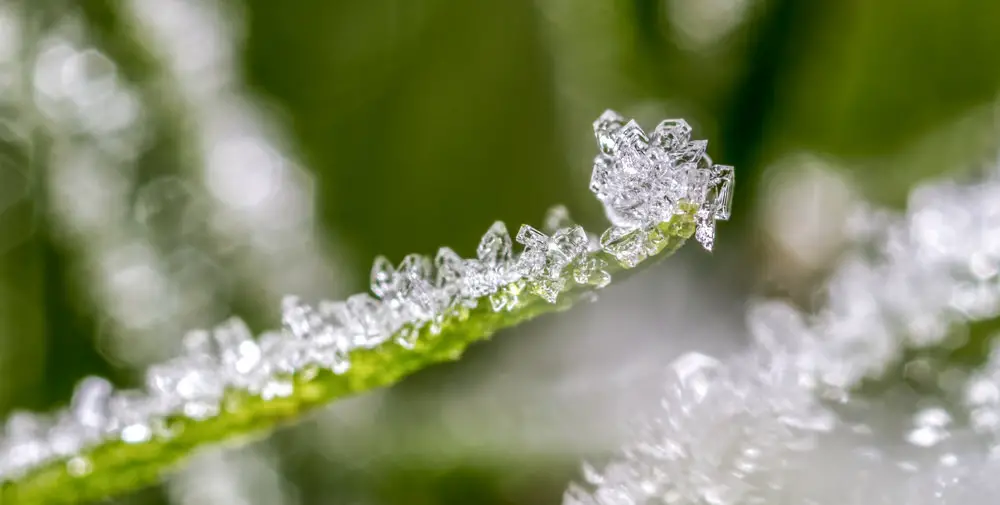
Frozen dew

Frozen dew is very common in cold areas, and meteorologists can easily forecast it. This happens in the early morning, and when the sun rises, it melts and evaporates.

What Is Frozen Dew?

Marshall Shepherd defines frozen dew as the water droplets and layers of dew that freeze. It happens when the temperatures fall below the freezing point. The dew condenses into a solid-state, as ice.

How Is Frozen Dew Formed?

As we all know, dew comes from the air like rain. It exists in water vapor before its formation. Thus, the process of dew formation depends on relative humidity.

Humidity is the amount of moisture present in the atmosphere. However, relative humidity is the amount of moisture in the atmosphere compared to the maximum moisture the air can hold. It is also at a specific temperature and in percentages.

At 75% humidity, the air can hold another quarter of the water it contains. At 100%, the air cannot absorb more water.During the day, the temperatures are very high due to absorbed solar radiation. As a result, rapid heating of the land takes place. Water on the surface then evaporates, and humidity increases.

Continued evaporation leads to an increase in relative humidity. When the relative humidity approaches 100%, evaporation cannot continue to take place. The air is, thus, referred to as saturated.

During the night, the temperatures of the land decrease. It results from the absorbed solar radiation escaping into the atmosphere. It then results in rapid cooling of the land as compared to the atmosphere.

For dew to form, certain atmospheric conditions should exist. They include:

Clear Sky

A clear sky is essential to ensure the land heats up optimally during the day. However, cloudy skies lead to the absorption of solar radiation. They also reflect away the solar radiation. The land, hence receives minimal heating, leading to low rates of evaporation.

At night, clear skies allow for faster cooling of the land. Cloudy skies act as insulation for heat loss during the cooling process. The condensation rate is reduced.

Still Air

An extensive layer of saturated … Read the rest of the story.

Read More about What is frozen dew?