Skip to Content

4 Different Types of Forests in Brazil

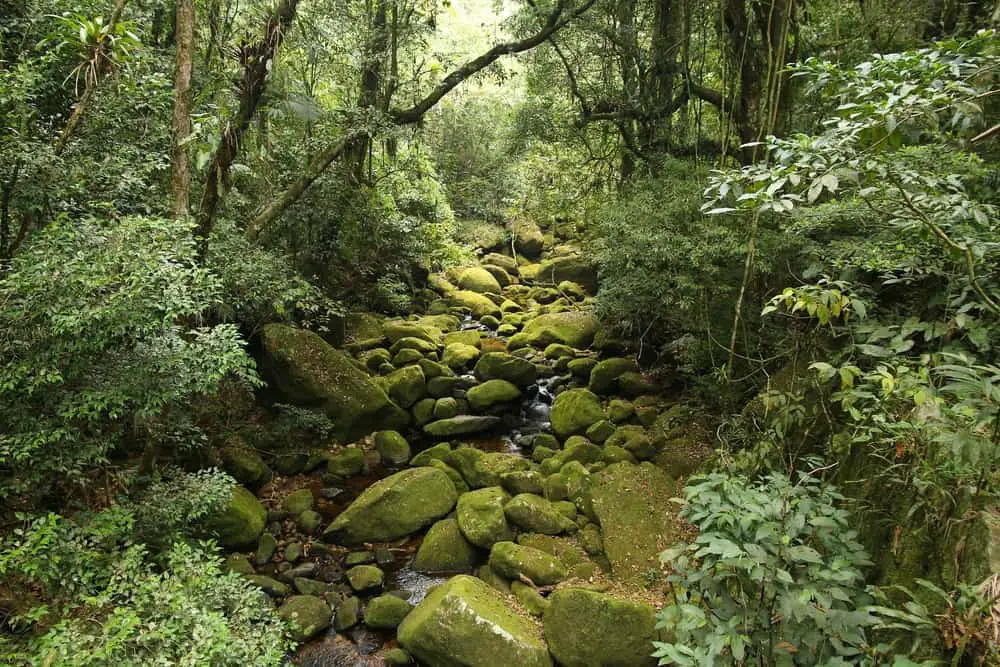
This is a close view of the Mata Atlantica Jungle in Brazil.

There are two main types of forests in Brazil, both of which are classified as tropical forests due to their location in relation to the equator. The forests in Brazil either consist of rainforest, including nearly 60% of the Amazon rainforest, or secondary forest, which is a juvenile forest that has been planted as a response to deforestation. The tropical forest in Brazil is the primary habitat of countless plants, fish, mammals, amphibians, birds, and reptiles. 
 
When it comes to forest areas, Brazil is home to some of the most diverse and dense forest areas in the entire world. Due to its location, much of the forest in Brazil is categorized as a tropical forest. It is hot and humid and home to countless species of flora and fauna that make this a diversified and valuable area.

60% of the Amazon rainforest is located within Brazil’s borders, and it follows that this area receives a great deal of rain throughout the year. Although the heart of the Amazon rainforest is in Brazil, much of the forest area is rapidly disappearing due to timber production and cattle ranching.

Below, let’s take a closer look at the types of forests in Brazil and better understand the plants and animals that call these forests home. 

Table of Contents

Tropical Forest

A small waterfalls inside the tropical forest.

Technically speaking, a tropical forest is any densely populated forest area that is located 28 degrees north or south of the equator. This location makes these tropical forests hot and wet. Usually, tropical forests will have an average yearly temperature that hovers around 85 degrees.

While there are tropical forests throughout the world, including South America, Asia, and Africa, Brazil has over 30% of the world’s tropical forest area. 

Brazil’s tropical forest is filled with dense trees that grow to be thick … Read the rest of the story.

Read More about 4 Different Types of Forests in Brazil

4 Different Types of Forests in Oregon

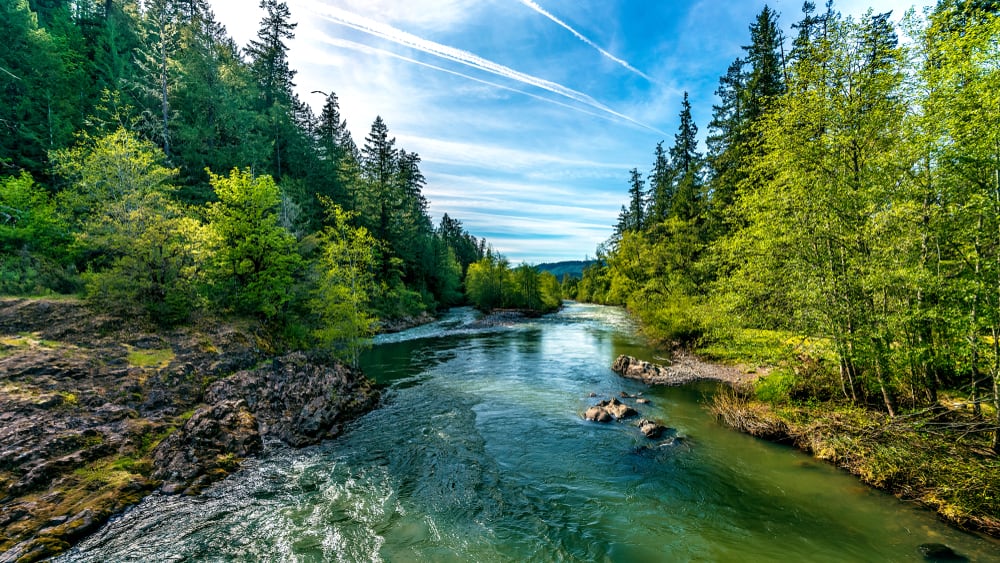
This is a close look at a river within a forest in Oregon.

Oregon is an exciting and fascinating part of the United States that is home to some incredible forests. Forested areas cover nearly half the state, and the vast majority of forests are conifers. This area also features the rare temperate rainforest.

It’s possible to see old-growth ancient trees in this area of the country, with some western red cedar trees reaching over 1,000 years of age. 

Table of Contents

Types of Forests in Oregon

Oregon is home to some incredible forests and woodland areas filled with ancient trees and beautiful, dense vegetation. It may surprise some people to learn that Oregon is actually home to a rainforest. Rich in vegetation, visitors will be pleased to find various tree types as the type of forest will change from one part of the state to another. 

Conifer Forest

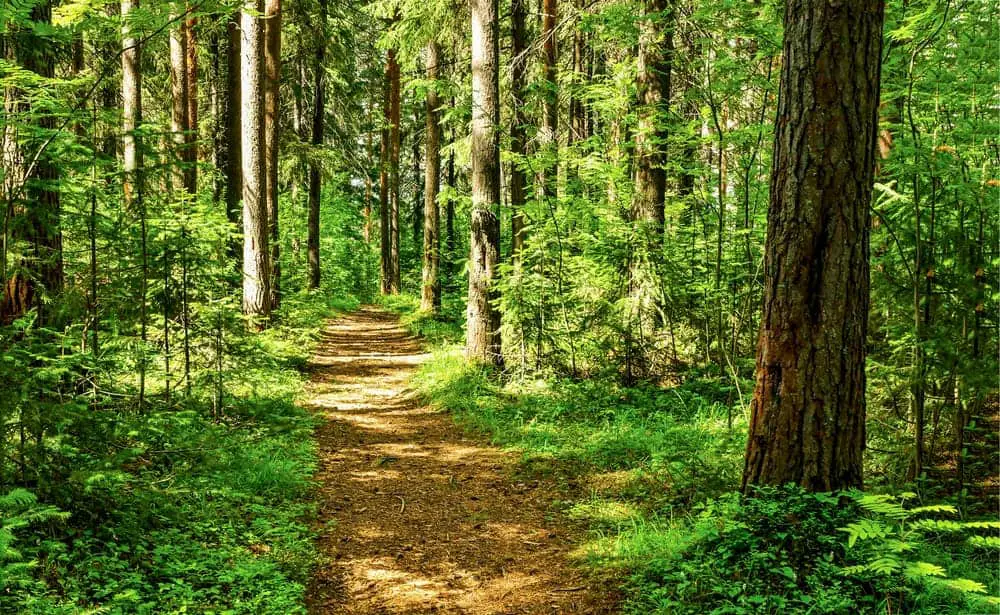
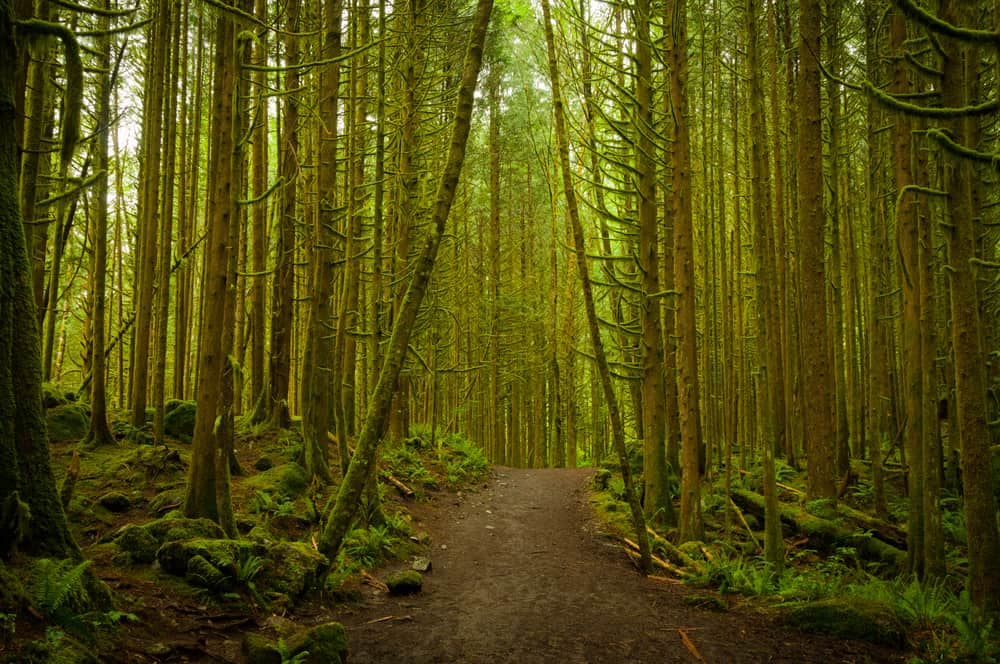
A close look at a conifer forest with a path running through it.

Oregon is home to many coniferous forests, which, as the name implies, consist mainly of conifer trees. These are trees that have long needles in place of leaves. They have needles attached to the tree year-long and are resistant to cold weather and harsh conditions.

Instead of flowers like other trees, conifers will get cones as they bud. These trees do an excellent job at surviving in particularly cold or dry conditions.  

The largest and most concentrated forests in Oregon are coniferous, which account for nearly 86% of all the forests in Oregon. Within the coniferous forests, Douglas fir trees account for over one-third of the total trees and vegetation. These trees are incredibly hardy, green all year round, and can grow large and strong.  

In Oregon specifically, several hemlock forests run along the crest of the Cascade mountains. Other conifer tree species found in Oregon include Englemann spruce … Read the rest of the story.

Read More about 4 Different Types of Forests in Oregon

How Many Tropical Rainforests Are There?

Dense tropical forest in the Chiew land lake.

One of my favorite facts about rainforests is that they’re cornucopias of life. According to worldrainforestday.org, rainforests contain about 50% of all terrestrial biodiversity. But, how many rainforests are there to be able to harbor such a considerable amount of ecosystems?

Well, scientists don’t usually refer to the number of rainforests in the world per se. Instead, they talk more about the amount of rainforest coverage in the world.

Tropical Rainforests Vs. Temperate Rainforests

This article talks about how many tropical rainforests there are in the world. However, tropical rainforests are only one type of rainforest. Rainforests are mainly divided into tropical and temperate rainforests.

Both tropical and temperate rainforests are located between the Tropic of Cancer and the Tropic of Capricorn. Rainforests are found on every continent, with the exception of Antarctica.

A portrait of a young woman standing beside the tree.

The main difference between tropical and temperate rainforests is that tropical rainforests are located closer to the equator, where the temperatures are warmer. On the other hand, temperate rainforests are found to the north and the south of the equator, along the cooler coastal regions. In addition, temperate rainforests have less biodiversity and receive fewer inches of rain per year.

For a rainforest to be classified as such, it must receive 60-80 inches of rainfall each year. Generally, a rainforest is defined as a forest that gets a lot of rainfall. In fact, it rains throughout the year in the tropical rainforest, and the environment is always hot and moist.

Another characteristic of rainforests is the four distinct layers.

  • Emergent layer. Emergents are the tall, giant trees that grow above the general canopy. Their height ranges from 70 to 100m.
  • Canopy layer. The canopy layer is the largest part of the rainforest, and the trees here also grow to be very tall. The canopy layer overlaps so much it creates a roof over the forest that prevents sunlight from reaching the forest floor.
  • The understory. The understory is a humid and damp level made up of smaller plants and trees, such as vines and palms. These plants have adapted
Read the rest of the story.
Read More about How Many Tropical Rainforests Are There?

What You Need to Know About Tropical Rainforests

Tropical lush rainforest landscape in Pangmapha, Thailand.

Introduction

What images come to mind when you think of a tropical rainforest? Do you imagine a dense, green forest with tall trees, vines, and flowers? Or do you picture a hot, humid jungle teeming with insects and dangerous animals?

Maybe you envision both. Tropical rainforests are located near the Earth’s equator. They are home to several diverse species of plants and animals.

The tropical rainforest is a biome, or environment, that occurs near the Earth’s equator. These areas are characterized by warm temperatures and high rainfall. Tropical rainforests are home to an amazing diversity of plant and animal life.

What is a tropical rainforest?

An aerial shot of Tropical rainforest in Belize.

A tropical rainforest is an ecosystem found near the Earth’s equator. This type of forest is characterized by its high rainfall, warm temperatures, and diverse plant and animal life. The tropical rainforest is an incredibly biodiverse ecosystem.

It is home to an incredible variety of plant and animal species, many of which are found nowhere else on Earth. Tropical rainforests are classified into two types: primary and secondary.

Primary forests are those that have never been significantly disturbed by human activity, while secondary forests are those that have been degraded or cleared at some point in history but have since regenerated.

The characteristics of a tropical rainforest

Tropical rainforest in the jungle.

The climate of a tropical rainforest is warm and humid, with average temperatures ranging from 20-30 degrees Celsius (68-86 degrees Fahrenheit). rainfall is also very high, typically exceeding 200 centimeters (79 inches) per year. The plant life of a tropical rainforest is incredibly diverse.

Trees, vines, shrubs, and epiphytes all grow in profusion. Many rainforest plants also have unique adaptations that allow them to survive in the conditions found in this environment. The animal life of a tropical rainforest is also very diverse.

Mammals, reptiles, amphibians, birds, and insects can all be found in abundance. Many animals are also highly specialized for life in the rainforest and are not found anywhere else on Earth.

Why tropical rainforests are important

A scenic photo of Mata atlantics rainforest.

Tropical rainforests are important for a number of reasons. They play … Read the rest of the story.

Read More about What You Need to Know About Tropical Rainforests

What are the Oldest Forests in America?

Sunny forest trail in a national park.

Imagine standing next to one of the tallest and oldest species still alive today–and taller than the tallest dinosaur ever recorded.

The Sitka Spruce are some of the oldest trees in America and they reach towards the sky at an impressive 180 feet, about the height of a 17 story building. There are places in America with trees that have existed for centuries.

You can visit several states across the US to experience them today.

Tongass National Forest, Alaska

A stunning aerial shot of Mendenhall glacier.

Tongass is the largest forest in the nation and some of the trees that are home here are thought to be more than 800 years old. Some of the rarest creatures live in the Tongass, including the Grizzly Bear and the Archipelago Wolf. It’s also home to the largest population of Bald Eagles in America.

The Tongass covers about 17 million acres and some of the trees which inhabit the area have trunks that measure, in diameter, more than 12 feet! The main types of trees found in the Tongass include Sitka Spruce, Red and Yellow Cedar, and Western Hemlock.

Porcupine Mountains, Michigan

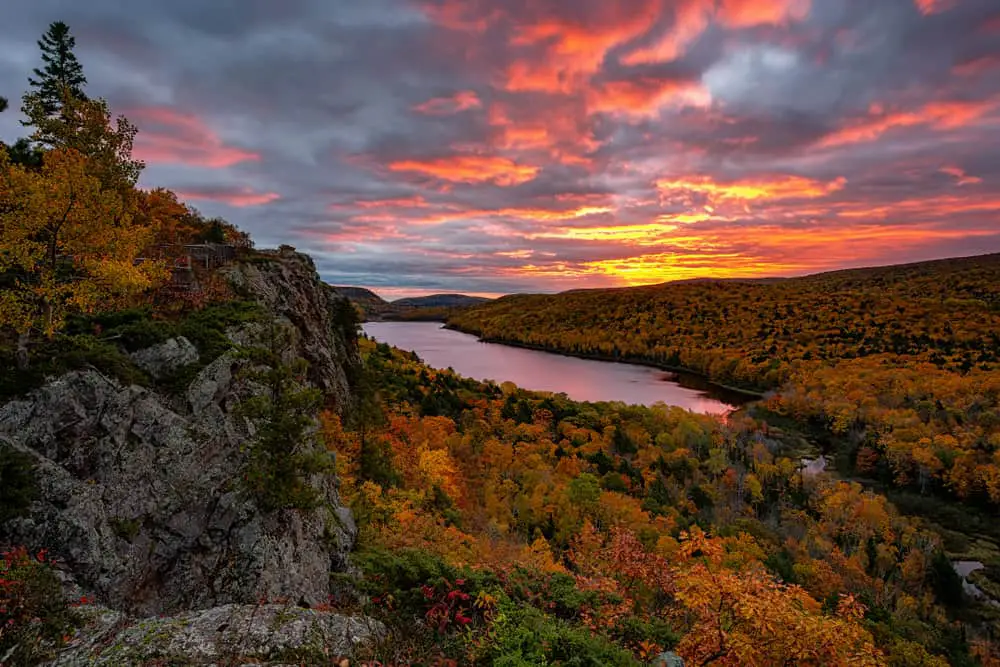
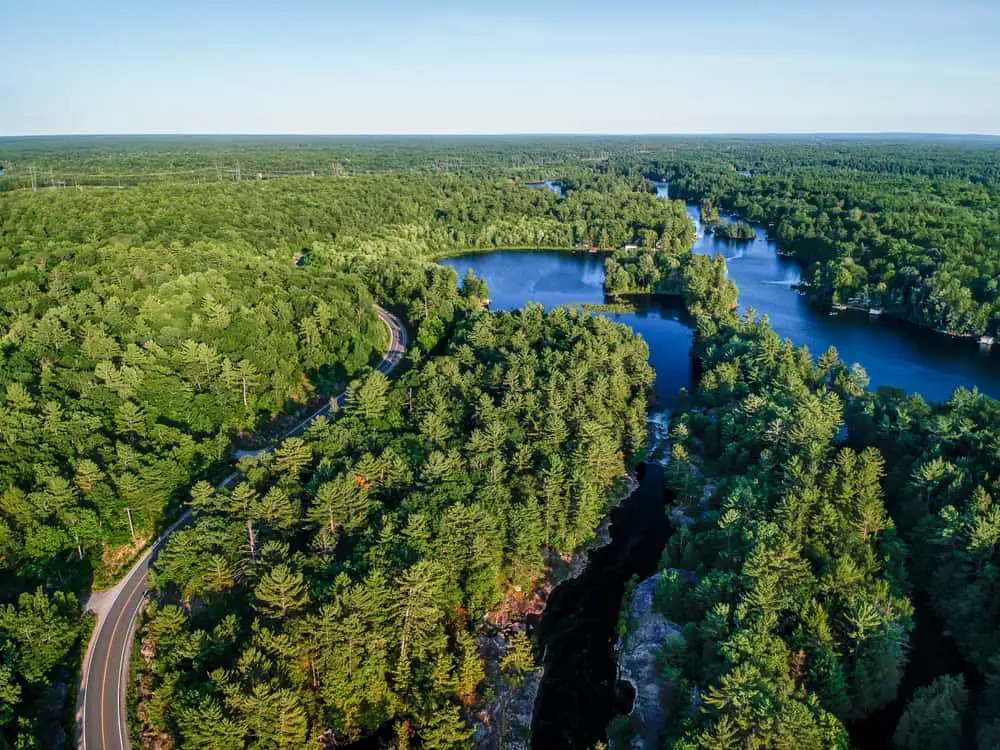
An aerial shot of a Lake surrounded by various flora.

Sugar Maple, American Basswood, and Yellow Birch are the most common types of old trees you can find in the Porcupine Mountains. The Porcupine Mountains are home to one of America’s oldest old growth forests. Old growth forests are otherwise called virgin forests, forests that have not ever been disturbed by logging.

The area is abundant in many species of trees and wildlife, including gray wolves, coyotes, red foxes, mink, bobcats, black bears, and white-tailed deer. The Porcupine Mountains state park dates back to 1945 and was established as a protective order for the old growth trees that grow there, mostly the maple hemlock species.

Rock Creek Wilderness, Oregon

Snowmass wilderness area at sunset near Aspens and Snowmass, Colorado.

The wilderness of Rock Creek is mostly dense rainforest and home to many Big Leaf Maple trees and Red Alder Trees. However, you can find Douglas Firs in this part of Oregon, which are some of the oldest in the area. Nearer to the ocean, you can find older Sitka Spruce as … Read the rest of the story.

Read More about What are the Oldest Forests in America?

What Are the Oldest Forests in the UK?

A scenic and peaceful view of the farm with mountains.

Old trees are fascinating because they have seen history unfold. All the ancient trees have been through more than any person alive today, considering the UK’s oldest forests are home to trees that are thousands of years old. But that isn’t the only reason why old trees are so special.

The oldest trees are better from an environmental standpoint. But first, I want to know where in the UK long-living trees have successfully adapted and thrived.

Where Can I Find Old Woodlands in the UK?

An old eynsford viaduct.

Some of the longest living trees are found in forested regions all over the UK.

The New Forest of Hampshire

Bridge over river in new hampshire.

William the Conqueror once claimed The New Forest and granted only himself and his aristocratic circle privileges to its access, in 1079. William the Conqueror and his men were allowed to hunt wild boar and deer in the forest. The forest now covers 219 square miles and is the backdrop for many smaller villages and wide open pastures.

Throughout May, bluebells bloom and giant sequoias cover the surroundings. Walking through, I might be intimidated by the enormous leaves and trees like something from an entirely different time.

Glen Affric Forest of Scotland

Glen Affric situated south west of the village of Cannich in the highland region of Scotland.

Glen Affric is a magnificent forest with 30 miles of old pinewoods and thick brush. The woodlands are surrounded by snowy mountains. It’s an incredible place to go for a hike as the area has scenic walking trails that include waterfalls and canyons.

Glen Affric has its share of wildlife that calls it home, including otters, red squirrels, and golden eagles.

Sherwood Forest in Nottingham

Trail leading through Sherwood forest in Nottingham.

I’m sure the story of Robin Hood, who took from the rich and gave to the poor, is well known. He is thought to have roamed and lived in the old Sherwood forest of Nottingham. Besides imagining what life was like during the days of Robin Hood and his merry men, I can visit Sherwood forest today and experience the calm of over 1,000 giant old oak trees.

The biggest oak in Britain is thought to be around 1,100 years old. … Read the rest of the story.

Read More about What Are the Oldest Forests in the UK?

What is the Youngest Rainforest in the World?

Scenic view of a beautiful rainforest stream.

What is the youngest rainforest in the world?

Rainforests are the lungs of the earth. Tropical rainforests produce 40% of the Earth’s oxygen. Unfortunately, about half of the world’s tropical forests have disappeared as crops and animal farmland replace trees.

In the Amazon, the world’s oldest rainforest, illegal logging destroys 18.7 million acres of rainforest annually, or the equivalent of 27 soccer fields per minute. That’s why it’s pretty amazing that the world’s youngest rainforest…was built by humans on the top of a hotel the middle of a desert! Read on to find out more about rainforests and Rosemont Forest—the youngest member of the family.

What is a rainforest?

A low angle shot of a beautiful rainforest.

A rainforest is an area of tall, mostly evergreen trees that receives a high amount of rainfall. Earth’s oldest living ecosystems, some rainforests are 70 million years old! (That’s a lot of birthday candles!). These ancient forests are located on every continent except Antarctica.

They house an incredible diversity of lifeforms, many of which scientists think we haven’t even discovered yet. Each rainforest is characterized by a four-layer structure:

  • Emergent
  • Canopy
  • Understory
  • Forest Floor

Emergent

In the emergent layer, 200 foot trees reach for the sky, drawing water and sunlight in through their leaves and releasing seeds into the wind.

Canopy

The canopy layer blocks wind, rain, and sun with a thick layer of vegetation to create a humid, dark environment with plentiful sweet fruits that attract lots of animals and insects.

Understory

Full of dimly lit spaces and large, strong-smelling flowers, the understory provides a home to many endangered and familiar rainforest animals. Elephants, pythons, antelopes, and gorillas all live here, as well as camouflaged hunters like the spotted jaguar and the deadly green mamba.

Forest Floor

Leaves fall and decay on the forest floor, creating a rich environment for decomposers—termites, slugs, scorpions, worms, and fungi that break down decaying material into nutrients that feed the forest. Floor foragers like anteaters find insects and tubers in this layer, and in their turn feed predators.

Types of rainforests

An untouched rainforest with palm trees.

Rainforests can be tropical or … Read the rest of the story.

Read More about What is the Youngest Rainforest in the World?

Why is the Soil in the Tropical Rainforest Infertile?

An aerial view of Amazon river in Brazil.

If you’re like me and pretty much everyone else, the word “rainforest” tends to conjure up images of lush, green vegetation. The idea that it’s infertile can seem really insane – but it’s true. People who try to grow crops there find out pretty quickly that it’s just not going to go well.

The question is how? How can something covered in green be infertile? The answer is that the soil is lacking the nutrients necessary for things to grow.

And I know what you’re thinking: If that’s true, why do things grow there? I promise that we’ll make this make sense, but it’s going to take a breakdown of some facts, so let’s dive in.

Let’s Go Back to School

In order to really get into the nitty-gritty of why rainforests are infertile, we must start with an understanding of what is supposed to take place. To do that, we need to go back to school for a second. Or, if you prefer, you can always think back to the first Lion King movie.

It gave a pretty nice depiction of the circle of life – but I digress. Now, in a perfect world – or perfect climate – a specific series of events occurs when an animal dies. They decompose at a rate that allows their nutrients to sink into the soil and build up, making them available as plants need them.

A dead sheep covered in flies.

The nutrients feed the vegetation, which the animals then eat on. Animals later die and decompose, perpetuating the cycle. Or as Mufasa stated, when lions die, they return to the ground.

Antelope feed on the grass, and then lions eat the antelope. Everything is connected. In addition to animal decomposition, when trees go to sleep, leaves fall to the ground.

Those leaves break down and feed the soil. In short, the circle of life keeps the soil fed and the plants and crops growing.

Rainforests Don’t Have a Perfect Climate

Unfortunately, tropical rainforests do not provide an environment conducive to this cycle for several reasons. We’re going to start with … Read the rest of the story.

Read More about Why is the Soil in the Tropical Rainforest Infertile?

Does a Lake Have to Be Landlocked?

A beautiful lake in Sweden with cloud's reflection.

More than 70 percent of the earth’s surface is covered in water, so it’s unsurprising that we have so many different types of bodies of water. Rivers, oceans, lakes, ponds – there are many types to know. And sometimes, understanding the differences can be difficult – especially when most people can’t exactly agree on a definition.

For example, not everyone can agree on whether a lake has to be landlocked or not, but it’s a common question. The answer is simple: yes, a lake is landlocked. We’ll dive into a more thorough explanation below.

Let’s Discuss What “Landlocked” Means

Northern shore of great lake superior.

The word landlocked is kind of self-explanatory. It means that something is locked in by land. When you’re talking about a country or a city, like Orlando, it means that it is completely or nearly completely enclosed by land or is away from the ocean. When referring to a body of water, it means there is no navigable or direct route to the sea.

Understanding the Definition of “Lake”

Now that you know exactly what landlocked means, let’s talk about lakes. There is often some discrepancy in the precise definition of a lake, but there is one similarity. Just about any definition you find will state that a lake is a “body of water that is surrounded by land.”

A scenic view of Lake Toba in Indonesia.

If landlocked means being surrounded by land and a lake is defined as being surrounded by land, then yes, a lake is landlocked. So why exactly can people not agree on whether lakes have to be landlocked? Well, there are a couple of different types of lakes that can make the definition confusing.

Let’s get into it in the next section.

Types of Lakes

There are actually several different types of lakes, including seepage lakes, drained lakes, spring lakes, and so on. However, for our purposes, we’re only going to focus on two categories of lakes: opened and closed.

Closed Lakes

A stunning photo of a beautiful lake with sunstrike.

A closed lake is exactly what it sounds like – it’s completely enclosed by land. There is no water flowing … Read the rest of the story.

Read More about Does a Lake Have to Be Landlocked?

The Natural Cycle in Lakes You’ve Never Heard Of

Sunrise lake scenery.

Nature is full of cycles of all kinds. All parts of nature, big and small, participate in some gradual process of change or renewal, and lake ecosystems are no exception. You may have heard of the water cycle, the rock cycle, or the nitrogen cycle, but there’s another cycle that you may not have heard of: the lake turnover cycle.

As cycles in nature go, it’s relatively unknown—or at least I can’t remember learning about it in middle school science class when I learned about all the other cycles—but it’s just as interesting as the rest.

What Is Lake Turnover?

A peaceful photo of sunrise in the lake.

Twice per year, temperature changes cause the top and bottom layers of water in lakes to cycle up and down and trade places, or “turn over.” This typically begins to happen at 50° to 55° Fahrenheit, and it can only happen in lakes with enough depth for the layers of water in them to stratify into different temperature zones. In other words, shallow, small lakes are too tiny for this to happen—the kiddie pool in your backyard won’t be showing signs of lake turnover.

What Causes Lake Turnover?

A natural lake with a lot of trees.

Lake turnover happens twice per year: once during the changeover from winter to spring when the top layer of water heats up and mixes with the rest of the lake, and once during the change from summer to fall when the top layer cools and sinks.

This process has everything to do with the relationship between temperature and density of water, and how that relationship makes water form separate, unmixing layers. Water is generally denser the colder it is, except for ice, which is somehow less dense than liquid water (go figure) and water colder than 39° Fahrenheit (again: go figure).

At any rate, water gets denser as it approaches 39° Fahrenheit, which is the temperature where water is at its most dense. As water cools further than 39° Fahrenheit, it becomes less dense. This fact will come into play when we look at spring turnover, the stage of lake turnover that’s slightly … Read the rest of the story.

Read More about The Natural Cycle in Lakes You’ve Never Heard Of

Why are there No Trees in Qatar?

Skyline in the city of doha qatar.

When you think of Qatar, what is the first image that comes to mind? Do you picture vast deserts and plenty of warmth, or do you envision a growing city that is bustling with life and a giant economy day in and day out? If you imagined either one of these scenarios, you are not incorrect.

Qatar, although it has rapidly evolved in the past few decades, was known for quite some time for its lack of trees and other forms of greenery.

Why are there no trees in Qatar?

Amazing photo buildings in Doha Qatar.

Qatar has gone through a lot of changes in the past few decades alone. Once a vast desert with plenty of old buildings and crumbling infrastructure, Qatar has since been transformed into a wealthy, bustling city for those who can afford it. While the rebuild was occurring in Qatar, trees were not considered a top priority, and many that were left were removed entirely.

It is also important to keep in mind that Qatar is located in a desert climate, making it much more difficult for trees to survive on their own. There are specific trees that are suitable for desert climates and regions such as Qatar.

Causes of a Lack of Trees in Qatar

Paraglider flying over sand dunes in qatar.

A lack of trees in Qatar can be explained by simply remembering that Qatar is in a desert climate, which can be extremely hot and dry year-round, making it difficult for vegetation to grow, including simple trees. As Qatar began to expand and rebuild, it created a giant metropolitan city of its own. Those rebuilding Qatar with their high-rise buildings and skyscrapers neglected to consider any of the trees or vegetation that stood in its way, thus leaving the city flattened without any trace of trees that once lived.

As the importance of trees and nature becomes more well-known throughout the world, initiatives such as manmade forests are becoming even more commonplace, even outside of desert areas such as Qatar.

Is it healthy to live somewhere without trees?

A qatar beach resort.

Not always. In fact, trees provide plenty of benefits in … Read the rest of the story.

Read More about Why are there No Trees in Qatar?

Are Flamingos Pink? If Not, What Other Colors Are They?

Group of colorful pink flamingoes standing in the water.

Flamingos are one of my favorite birds. They’re so graceful and their color palette is simply stunning. However, I was recently surprised to find out that not all flamingos are pink.

There are several different types of flamingos, each with its unique color scheme. If you’re curious about flamingos and want to learn more about their coloration, this article is for you!

How Flamingos get pink skin

A macro shot of beautiful pink flamingo.

A flamingo’s pink skin is not a hereditary trait – this means that they were not born pink. According to expert Zoologists, flamingos are born white or dull grey. So how do they get their pink skin?

Well, it’s primarily caused by their diet. The food that they eat – algae, brine shrimp, and brine fly larvae – contains high amounts of carotenoids. These are the pigments in plants and certain sea creatures that give them their bright orange, yellow and red colors.

Once the flamingos consume these plants, the pigment is metabolized inside of the digestive system – turning their body and feathers pink. Some flamingos are brighter in color than others. This is primarily due to the amount of carotenoid-rich food they consume.

With that being said, the Caribbean flamingo is the brightest. In the Caribbean, carotenoids can be found in abundance. A fun fact to know is that flamingos eat upside down.

The reason being is because it has evolved to do so. Its top bill (beak) functions as a bottom bill and vice-versa. So, in other words, its bottom bill is much larger and stronger, so it has to turn its head upside down to eat to accommodate that.

This is the complete opposite of any other bird. They have long legs that allow them to wade in deep water to look for food. Once they find an area, they take their feet and stir up food from the bottom of the water – then dunk their head in to eat.

They use their tongue to filter out water or any other thing they don’t want to eat.

Can flamingos be other colors?

Read the rest of the story.
Read More about Are Flamingos Pink? If Not, What Other Colors Are They?

How Long Are Dandelion Roots?

Fresh dandelion roots with yellow flower leaves.

The central tap-root of a dandelion grows up to 3 feet long, but for most dandelions, it’s 6 to 12 inches. If you’re like me, you have a love-hate relationship with dandelions. You might know them as puffballs, lion’s tooth, or monk’s head.

The bright, yellow blooms are harbingers of springtime, which I yearn for after a cold winter. But, when they invade my lawn, I get out my dandelion puller tool. The thing is, I don’t just pull them and toss them into a compost pile.

I take them inside, clean them off and eat them as a side dish with dinner or dehydrate the roots for later use. Did you know that you can eat all parts of the dandelion roots and leaves? But, if you’d rather not have pesky dandelions in your lawn, here’s what you need to know about dandelion roots, and how to get rid of them.

What Is a Dandelion Taproot?

A beautiful dandelion taproot.

The dandelion (Taxaracum officinale) is a hardy, perennial plant that grows in all kinds of soil conditions. The reason it’s so successful is because of its taproot. The tap-root grows deep into the soil, which protects the plant from several conditions, such as:

  • Frost
  • Heat
  • Drought
  • Overwatering
  • Crowding

The tap-root is the main root of the dandelion’s root system. It carries all the water and minerals into the plant. There are also root hairs that grow out of the large taproot.

They are closer to the surface and absorb water and nutrients from the soil. The tap-root actually stores the nutrients and moisture that the dandelion needs to regrow. This is why the dandelion comes back even if you pull up the leaves and flower stems or mow them down.

Will the Dandelion Die if the Taproot Breaks?

If the dandelion taproot breaks, but a portion of the root is still intact, a new plant will grow. As little as one inch of the taproot can grow a new plant. I found this out the hard way when my hand-pulling was always futile.

You … Read the rest of the story.

Read More about How Long Are Dandelion Roots?