Skip to Content

Why do Porcupines Smell so Bad?

A threatened North American porcupine.

What Are Porcupines?

Porcupines are considered rodents. They have brown, yellow fur and stiff quills covering their bodies everywhere except their soft fur-covered stomachs. They are the second-largest rodent in North America, second to the American Beaver, which is almost double their weight.

The average American porcupine weighs only about 20 pounds, and their length is about twenty-five to thirty-six inches full-grown. A male porcupine is bigger than a female. They have a prehensile tail which is like a third arm and can wrap around a tree branch, allowing them to be stable climbers.

They tend to be nocturnal, but you can occasionally find them wandering around during the daytime or early evening. The porcupine’s feet have four toes on the front and five toes on the back. Each toe has large curved claws that help the porcupine climb trees and get the food they like to eat.

Porcupines are herbivores that love to eat leaves, twigs, bark, and green plants, and their claws help them do this. The pad of their foot is relatively soft and hairless. Another interesting characteristic of the porcupine is the ability of their feet to help them swim, and they are excellent swimmers.

Between the buoyancy of their quills and their feet doggy paddling, they glide through the water with ease. The porcupine’s eyesight is poor, but its keen hearing and an acute sense of smell help the porcupine overcome its sight.

The Mechanisms of Defense of a Porcupine

A two adult porcupines sniffs on the ground.

The porcupine has a lot of predators, which is pretty surprising since they have some rather unique mechanisms of defense. Some predators are cougars, coyotes, bobcats, foxes, lynxes, bears, wolves, and great horned howls. Scientists have found quills in all the animals as the porcupine attempts to protect itself from them.

The predator will attempt to attack the porcupine by biting at its unprotected face or biting at its belly side, which has no quills and is very soft. In addition to the porcupine’s soft body parts and poor eyesight, they are also slow-moving – they max out at … Read the rest of the story.

Read More about Why do Porcupines Smell so Bad?

Which Birds Have Webbed Feet?

A juvenile swan left foot against a concrete floor.

Penguins, geese, ducks, albatrosses, coots, avocets, and flamingos are a few examples of birds that have webbed feet. Did you know that there are over 400 bird species with webbed feet? Webbing between the toes is a feature of swimming among certain birds.

The webbed feet help the bird to be more effective in the water. Additionally, diving birds also use it to propel themselves through the water. I’ve always been impressed by gosling’s ability to swim as early as two weeks after birth.

But, until I learned about their webbed feet, I was always perplexed about how they could swim at such a young age. Let’s look at the different webbed feet and birds with web-feet features.

Webbed Foot Explained?

A close-up shot of a flamingo webbed foot.

The webbed foot in birds is an anatomic structure comprising the skin that connects the digits of a bird. This structure allows the bird to swim and helps them walk in unstable surfaces such as muddy or swampy places. You can find this anatomical structure of webbed feet in many species of aquatic and semi-aquatic birds.

It’s primarily found in birds that depend on swimming for a significant part of their lives. Most birds that have webbed feet live near water. You may also find webbed feet in amphibians and mammals such as frogs and American beavers.

The Types of Webbed Feet

The fusion of all or some toes forms webbed feet in birds via thin sheets of skin. This can be classified based on the extent of webbing and the type of toes involved.

Here are the different categories of webbed feet in birds.

  • Palmate: A large membrane connects the anterior toes at full length in palmate feet. The front toe, known as hallux, is entirely separate from the other three toes, forming a hind toe. Palmate feet are standard in birds like ducks, geese, gulls, and swans.
  • Totipalmate Feet: A broad, thin membrane binds all four toes in these feet that are flat and resemble paddle-like structures. You can find the totipalmate feet in penguins, grebes, pelicans,
Read the rest of the story.
Read More about Which Birds Have Webbed Feet?

Do Grizzly Bears Eat Coyotes?

Grizzly bear captured a fish on the river.

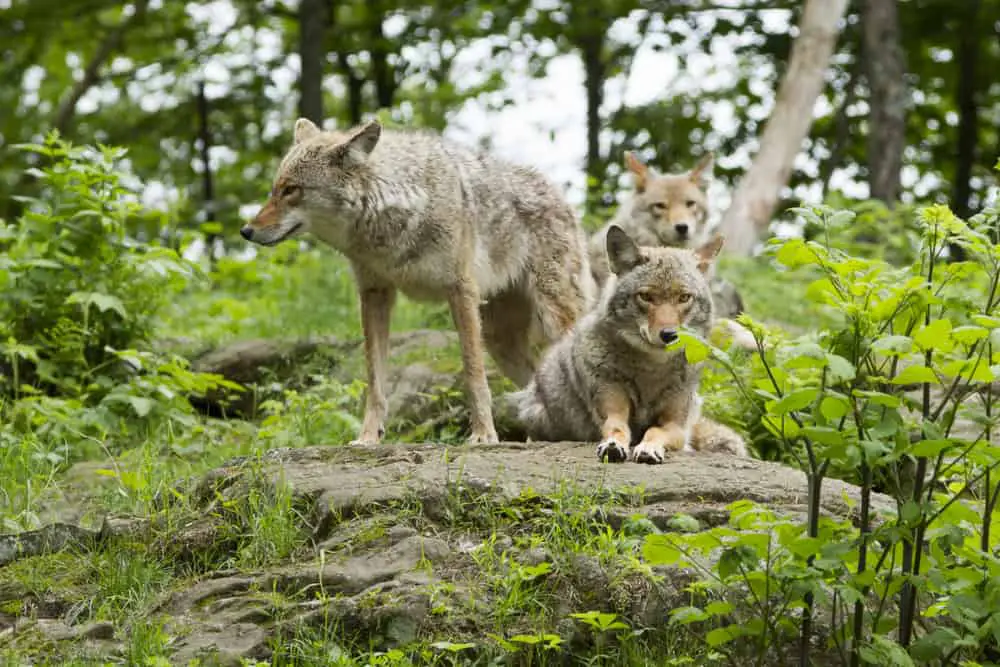
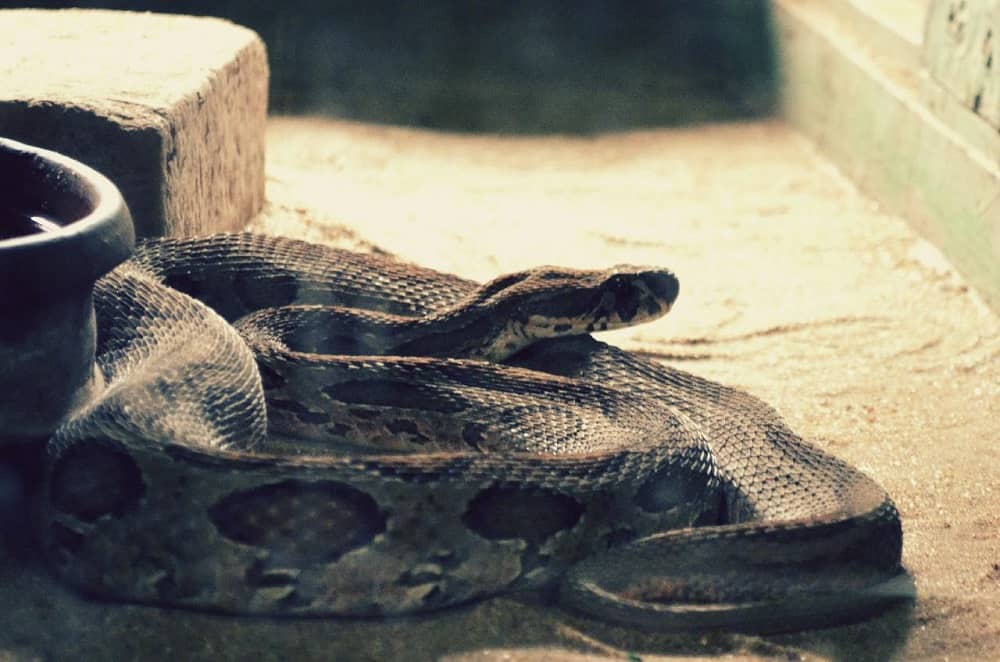
Coyotes eat just about anything they come across, most of which is some form of meat. They often hunt deer, fish, crustaceans, snakes – yes, snakes. And they do that pretty smoothly by teasing the snake long enough for it to straighten out.

Once they’re uncoiled, the coyote can grab onto their head and begin to feast. Seeing that I’m not exactly a fan of snakes, I’m happy to know that there is something out there ready, willing, and able to defeat them. Coyotes are also known to eat pets and more.

With such an equal-opportunity and ravenous predator, it’s easy to wonder what – if anything – eats it. A common question is whether or not a grizzly bear will eat a coyote. The answer, in short, is yes – but it’s not usually an active pursuit.

Keep reading to learn more.

A Grizzly Diet

A giant grizzly bear catches salmon.

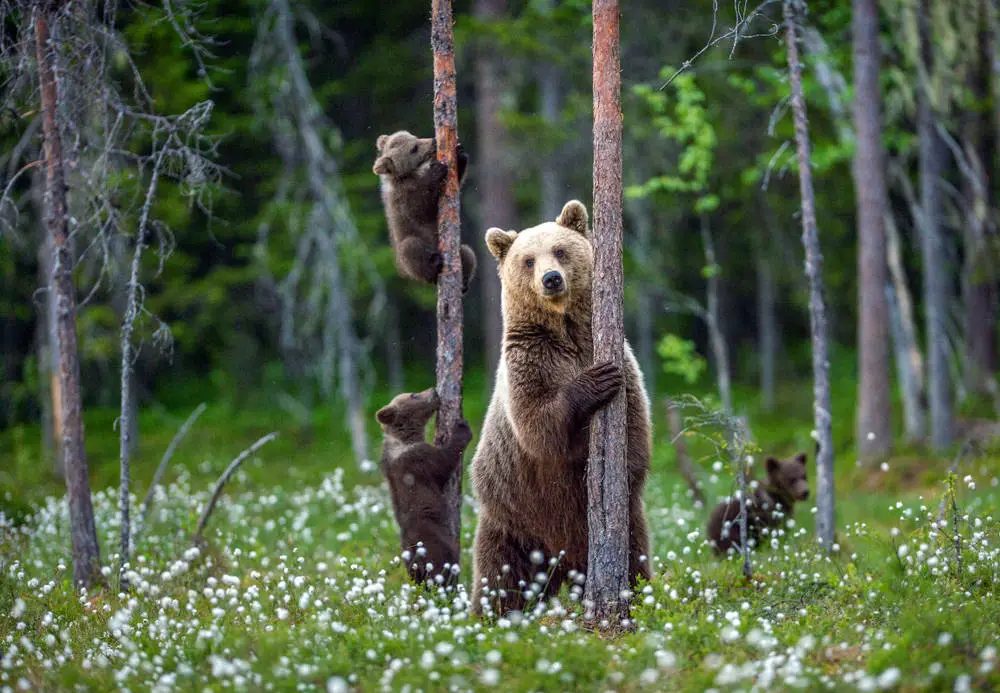
Grizzly bears are omnivores. In case you’ve blocked science class from your mind, an omnivore is a creature that eats both plants and animals. While this is the case with bears, most of their diets consist of plants they find as they roam.

Can you imagine being able to just roam the wilderness, munching on whatever you come across and napping whenever you choose? It sounds a bit dreamy. In any event, that’s how grizzly bears tend to live life – most of the time.

Sometimes, though, they actually decide to hunt. Maybe that’s because they haven’t come across any appetizing vegetation. Or maybe they just decide it’s time for something with a little more substance.

When they do decide to hunt, their prey can include anything from fish to elk. If they run across domestic territories, they’ll take advantage of cattle and sheep, too. And during the summer and fall, they’ll eat more to build up their fat reserves so that they can survive the winter season.

When Do Grizzlies Eat Coyotes?

Coastal brown bear on the hunt of salmon.

Again, grizzly bears don’t actively hunt coyotes. If they’re going to hunt prey, they usually go after large animals, like … Read the rest of the story.

Read More about Do Grizzly Bears Eat Coyotes?

What Animal is Similar to a Butterfly?

A stunning photo of a beautiful natural butterfly in flower.

Butterflies are beautiful creatures that fascinate people of all ages. Even dogs are enchanted by them. On the surface, butterflies appear to be unique – and they are.

However, don’t be fooled into thinking there are no other creatures like a butterfly. There are quite a few animals that are similar to butterflies in one way or another. Some of them might surprise you!

Dragonflies

A dragonfly landed on a strand.

While most of us know that butterflies go through a complete metamorphosis, from egg to caterpillar to pupa to adult, many people are surprised to learn that there is another creature that goes through a very similar process.

That creature is a dragonfly. Like butterflies, dragonflies start life as eggs. Once they hatch, they go through a larval stage, during which they grow and mature.

This stage takes anywhere from a few weeks to a couple of years, depending on the species. Once they’re ready, they enter the pupal stage. During this time, they undergo a complete transformation, emerging as adult dragonflies.

One of the most notable similarities between dragonflies and butterflies is their aerial prowess. Both creatures are excellent flyers, able to zip around in all directions with ease. They’re also both attracted to brightly-colored flowers.

Another similarity between these two creatures is that they both have compound eyes. This type of eye is made up of thousands of tiny lenses, which give the creature a nearly 360-degree field of vision.

Skippers

A macro shot of a skipper perched on leaves.

If you’ve ever seen a butterfly that looks more like a moth, you were probably looking at a skipper. Skippers are a type of butterfly that is closely related to moths. They share many of the same characteristics as moths.

Like moths, skippers have a furry bodies. They also have very large eyes, and their antennae are thick and club-shaped. One of the most notable differences between skippers and other types of butterflies is their wing structure.

Skippers’ wings are more like a moth’s wings, in that they are fringed with hair. Skippers are also very good flyers. They can fly quickly and make … Read the rest of the story.

Read More about What Animal is Similar to a Butterfly?

Where Do Porcupines Live and Sleep? What’s Their Habitat?

Porcupines sniffing on the ground.

The porcupine is a large rodent that has a total of 27 relatives who belong to the porcupine family. The porcupine is known as the third largest rodent that is covered in quills or spine-like defense protectors. While some find porcupines intimidating and scary, others may find this interesting rodent cute at first glance.

If you are curious about the porcupine, you may be wondering where the porcupine lives, eats, and sleeps. The porcupine lives and thrives on all continents except for Antarctica, and can be found in a variety of climates and reigns from mountains and deserts to forests and grasslands.

Where can you find a porcupine?

A porcupine in juggling on a closed rope.

Currently, it is possible to find one of two types of porcupine across all continents except for one, Antarctica. Porcupines live in North and South America, India, Africa, Europe, and Australia.

What is the habitat of a porcupine?

A porcupine standing on a sandy surface.

Porcupines are extremely versatile and can thrive in a variety of environments, from grassy grasslands to dry deserts and snow-covered mountains. The porcupine can be found in various tree branches, cave dens, log holes, and even in crevices between rocks. Because the porcupine is so adaptable, it has survived in most climate types that still exist today at some point or another.

Many porcupines live in family groups of five to six additional porcupines. These family groups work together to create tunnel and burrow systems for protection and housing year-round, depending on the climate and region the porcupines reside in. Some porcupines may live in monogamous pairs, while others may prefer to work in larger groups or live on their own in solitude.

In the wintertime and during the colder months of the year, porcupines can be found huddling with their family groups and preferred mates to keep warm and for additional protection.

What do porcupines eat?

A macro shot of a porcupine eating a portion of leaves.

Porcupines are not carnivores, but are instead natural nocturnal herbivores. Porcupine herbivores prefer to find delicious vegetation such as leaves and various outdoor plants. They also enjoy some berries, bark, stems, and other natural sources of wood, You can also find … Read the rest of the story.

Read More about Where Do Porcupines Live and Sleep? What’s Their Habitat?

Golden Retriever vs Coyote – Which Is Tougher?

A sunny portrait of a golden retriever in a grass field.

You love your Golden Retriever – there’s no doubt about that. You want to take him with you on hikes and jogs and any other outdoor adventure you seek. You also want to let him run free in your yard and enjoy being a dog, right?

Chances are, though, that if you live in an area where coyotes are present, you’re probably worried that all of this might put your furry friend in danger. And you’re probably wondering whether your Golden could win a fight if a coyote approached. Who is tougher: a Golden Retriever or a coyote?

The answer: well, it’s not as simple as the question. Coyotes and Golden Retrievers grow to about the same size, but – sadly – this doesn’t exactly level the playing field. It’s possible that your dog could win, of course, because anything is possible.

However, for all the reasons listed below, it’s best to never take that chance.

Predatory Instincts

Coyotes are natural predators – that’s just who they are. They survive on these instincts, which make them naturally aggressive. Golden Retrievers do not have those same aggressive characteristics.

In fact, they’ll rarely – if ever – attack someone or something. If they do, it’s typically out of protecting themselves or their humans. So, will your Golden Retriever fight a coyote if that coyote is threatening you?

Probably so. Will they win? Probably not.

It’s not their fault, though. As coyotes are hunters, they go straight for the kill. Specifically, they’ll go straight for a bite to your Golden’s throat if that shot is open – and that’s a pretty deadly move. If, by chance, your pup does win the fight, they’ll likely be severely injured.

Daily Life

Let’s think about the difference in how coyotes and Golden Retrievers live their daily lives. Golden Retrievers are pets – except for strays, of course. Yours, however, is a pet – a member of your family.

You feed him, give him a place to sleep, take him to the vet when he’s sick, and so on. Life is … Read the rest of the story.

Read More about Golden Retriever vs Coyote – Which Is Tougher?

Can You Eat Porcupine?

New world porcupine eating leaves from a green stalk.

Many civilizations in Canada are said to have eaten North American porcupines. Depending on the culture, it had varying degrees of prominence in the diet. As a tribute to the cultural significance of porcupines, Malecite referred to the Micmac as “porcupine Indians”. Some people still eat porcupines today.

The number of porcupines in the area has decreased over the years in several civilizations, including the Vuntut Gwitchin (Gwich’in), Aishihik, Champagne, Hopedale, and Inuit.

How Do People Eat Porcupines?

Believe it or not, porcupine meat is very versatile, meaning you can prepare it way imaginable and still enjoy it. I sound so convincing even though I haven’t tried it yet. However, my in-depth research has shown that many cultures have eaten them, boiled, stewed, roasted them, and more.

Let’s learn more about catching them, how and where they live and how to prepare porcupine meat.  Some people even eat the porcupine fetus. Research shows that porcupine meat improves skin health, delays aging, fights off the infection, and supports heart health.

Typhoid, epilepsy, and cancer are also some diseases that people believe are curable by porcupine meat or medicines. The onion-like concretions that form in porcupines’ bodies are supernatural or ghastly in appearance.

Hunting a porcupine

If there were no alternative sources of food, many northern civilizations would only kill porcupines in those scarce times. The slow and clumsy movement of a porcupine on the ground makes capture relatively simple. Porcupines were killed in a variety of ways.

In the winter, Tselona Kaska burns the porcupine out of its house before striking it with a club or stick, as did Waswanipi Cree, Mistissini Cree, Blackfoot, Tahltan, Tlingit, and Vuntut Gwitchin. When rifles became available, the Sioux, Chipewyan, Vuntut Gwitchin, and Hare (Sahtu) peoples also utilized them to defend themselves.

Snares were utilized by the Montagnais (Innu) and Micmac (Mi’kmaq), but traps and snares were employed by the Micmac (Mi’kmaq) as well Dagenais, but the Spokane utilized both snares and traps. Before the arrival of the caribou, the Chipewyan people hunted porcupines during Autumn. Porcupines were … Read the rest of the story.

Read More about Can You Eat Porcupine?

Do Porcupines Shoot Their Quills? How Do the Quills Work?

A beautiful close-up photo of a porcupines quills.

What do Porcupines look like?

Porcupines are herbivores that love to eat leaves, twigs, bark, and green plants. They are considered rodents with brown, yellow fur and stiff quills covering their bodies except for their soft stomachs. Weighing only about 20 pounds and their length is about twenty-five to thirty-six inches full-grown, males are bigger than females.

They have a prehensile tail which is like a third arm and can wrap around a tree branch, allowing them to be stable climbers. They are the second largest rodent in North America, with the capybara leading them in size. Porcupines tend to be nocturnal but sometimes wander around during the daytime.

Tell Me about the Quills of a Porcupine

Porcupines on a light background.

Porcupine quills are hollow hairs made of hardened keratin that look like hollow feathers. Keratin is the same material that your fingernails are made of and the same as porcupines’ claws. They have a saw-toothed feathery barb at the end of the quill that makes it stuck in you if you should happen to get quilled.

They are the self-defense mechanism and protection of the soft furry body of the porcupine. The quills are sometimes called guard hairs because they are really just hardened hairs. The interesting part is they contain an antibiotic naturally in them.

Does this mean the porcupine protects its predators? Well, yes, sort of, but it is really to protect the porcupine if it accidentally gets poked by its own quills. Quills can vary in length, depending on the species of the porcupine.

The average quill is about two to three inches, but the African crested porcupines can have quills that are a foot long and as thick as a straw. One porcupine can have about 30,000 quills spread over its back and on the end of its tail.

Can a Porcupine Shoot its Quills?

Close-up photo of strands of Porcupine quills.

Porcupines cannot shoot their quills, not even one inch, but I would not get close to a porcupine. If you get too close, you could instantly have dozens of quills stuck in you. If you get close enough, the … Read the rest of the story.

Read More about Do Porcupines Shoot Their Quills? How Do the Quills Work?

27 Different Types of Porcupines

Porcupine on the wild forest.

Depending on where you stand, there’s something about nature that’s cute, stubborn, destructive, or dangerous. When it comes to porcupines, they embody nature. Their adorable faces and non-aggressive demeanor are welcoming, but the 30,000 quills on a porcupine’s back say, “not too close.”

Quills are the thorn-like structures on a porcupine’s body. Sometimes, they’re referred to as spines. With a porcupine, it’s a matter of ‘just look and don’t touch.’

Trust me, I learned this the hard way once I developed an interest in these animals! On the positive side, I also discovered that, contrary to popular belief, porcupines don’t shoot their quills. What happens is they get stuck and dislodge once they come into contact with human or animal flesh.

This is made possible by microscopic fish-hook-like barbs at the tip of each quill. But there is much more to this cute, ‘look but don’t touch,’ mammal. Let’s explore.

Amazing Facts About Porcupines

Porcupines are the world’s third-largest rodent after the capybara and the beaver. The quill-covered animals use their quills to defend against predators like lions, leopards, and humans. Biologically, porcupines are in the order Rodentia, but they subdivide into the Hystricidae and Erethizontidae families.

In layman’s terms, these two families are understood as Old World porcupines and New World porcupines, respectively. Old World porcupines are found in Asia, Italy, and Africa, while the New World porcupines are in North America and northern South America. Furthermore, porcupines are nocturnal, but the New World porcupines are not strictly nocturnal.

At times they come out during the day. They can also inhabit the trees and are generally smaller in size.

Different Types of Porcupines That Exist Today

There are many types of porcupines, many  being considered new world and the others  old world porcupines. Some of the new world porcupines are from a declassification of defunct taxonomic groups. Follow along as we explore all the types including their histories, habitats, diets, size, and much more..

Old World Porcupines

Old World porcupines are terrestrial rodents. They are larger and … Read the rest of the story.

Read More about 27 Different Types of Porcupines

Types of Wolverines

Wolverine on a rock in infrared.

There is only one type of wolverine, although the creature lives in many parts of the world. The scientific name for them is gula and they are related to the weasel family and wolverines are the only living member of this genus or species. They are short, stocky animals, 25-30 inches long and have shaggy hair and big paws.

It can have mahogany brown fur, black and some white on its body. The species tend to vary in color and their sharp claws and large paws are used to hunting prey. Another name for the wolverine is the mountain devil or skunk bear.

Where It Lives

Arctic forest silhouette.

Wolverines live in forests, in the arctic, plains or tundra located in North America, Europe, and Asia. They are creatures that like solitude and need room to roam freely. Wolverines live in cold climates in Russia, Canada and Scandinavia too.

In the United States, it is found in Alaska, the Rocky Mountains, and the Sierra Mountains. In Canada, it is known to live in high elevation mountains,  boreal forests, tundra, and plains.

What It Eats / How Often It Eats

They like to eat meat primarily and hunt small animals, rabbits, rodents and sometimes attack larger animals if they appear to be weak or injured. They will feed on the corpses of animals like deer, elk and caribou. This often helps them survive the winter when there is less prey around.

They are known to dig into burrows and eat hibernating animals too. They do eat plants and berries in the warmer weather. Wolverines feed on wounded or dead animals that are not a threat to them when food is scarce.

Other types of food it eats are bird eggs, insects, roots, seeds and lavaw. It eats a variety of foods.

How It Gets Food

Wolverines often hunt at night and use smell to find wounded or dead carcasses to feed on. They look for small animals that are easy to kill . Sometimes they will attack a wounded animal and in some regions attack sheep to find food.

These animals adapt to the … Read the rest of the story.

Read More about Types of Wolverines

10 Different Types of Badgers

Three badgers are playing on green grass.

Badgers live all around the world and have a reputation as tough animals that will fight to the death. The Honey Badger, especially, is known to fight much larger animals and often wins those fights.  Badgers have their own lore around the world in addition to a reputation for toughness.

In North America, coyotes sometimes eat badgers and vice versa, but the majority of their interactions appear neutral. They often tolerate each other and have been known to work together hunting. The badger can root out rodents, and coyotes catch them when they try to escape.

Another story that may be more legend than truth, has it that a bird leads the honey badger to where the honey is. The badger attacks and eats his fill, and the bird gets what is left.

Family Mustelidae

Subfamily Melinae:
Hog badger, Arctonyx collaris

A top-view of a greater hog badger.

Hog badgers live in Southeast Asia, from China to Thailand, as well as parts of the Indian subcontinent. They like grasslands, hills, and mountains, and evergreen and tropical areas. These badgers are adaptable when it comes to food, and eat what is available in their area.

They eat plants, worms, and small animals. Hog badgers have a long snout and large claws that make them adept at digging. They eat fruit and roots, and earthworms appear to be a favorite.

Hog badgers are strong predators, and defenders of themselves when needed, with big claws, strong jaws, and a reputation as having a bad temper. They have a snout like a hog and can sniff out food underground. They can dig very fast, whether looking for food or digging out a place to hide.

Badgers are nocturnal, sleeping during the day in the burrows they have dug. They tend to be solitary animals but travel in small groups at times. Badgers have lived 12 years in captivity, and it is believed that is how long they live in the wild as well.

Hog badgers can dig tunnels where they live, and they can be extensive. In some cultures, badgers are hunted … Read the rest of the story.

Read More about 10 Different Types of Badgers

7 Different Types of Geckos

A macro shot of a juvenile gecko.

The geckos may have been popularized by an advertisement on TV, but they are cute little animals. It’s easy to see why someone might want one of their own. They are lizards and have a wide variety of shapes, sizes, and habitats.

They are reptiles, so they prefer warm weather, and live in places like rainforests or deserts. They range in size from just more than an inch to over a  foot long. Most of them do not move fast and are not active.

They are easy to tame and becoming more popular as pets. They live all around the world in warm areas. Geckos like to eat insects, and they do not need to eat every day, which makes them easy to care for.

Family Carphodactylidae

Adult australian ocellated velvet gecko.

The Carphodactylidae family of geckos live in Australia. There are seven genera and a few dozen species in this family. These have padless feet, which allow those that have them to climb more easily.

Without pads, these geckos must use their fingers and claws to climb. There are the chameleon Carphodactylus, and others are differentiated by their tails with names like thick tail, leaf tail, and knobed tail. They are among the larger geckos at about six inches, half of which is the tail.

Geckos in this family prefer wet and warm climates, but they have been found in all areas of Australia. Many have colorful tails which separate them by species. They eat insects and may only eat every three or four days.

They can survive for as long as two weeks without food, using fat in their tails. Geckos can live 20 years in captivity, and more species are being kept as pets. Many are active during the day, in the morning and evening.

These different genera are found in different areas of Australia, except for the Nephrurus, which are throughout the country. The Undweroodisaurus is on the south coast, and the phyllurus is on the east coast. They typically lay two eggs a couple of times a year.

Genera of this family include:Read the rest of the story.

Read More about 7 Different Types of Geckos

Webbed Feet: Why Are They So Important to a Bird?

A cropped photo of a zoomed wild duck's feet on the grass.

As someone who loves birds, you might be curious if all birds can swim. After all, not having webbed feet would seem to make swimming more difficult. However, webbed feet are not the only important features that help a bird to swim.

Waterproof feathers, the proper body weight, and even body proportions play an important role in whether or not a bird is adept at swimming or if swimming is a fatal activity. So, can birds without webbed feet swim? Let’s take a closer look.

Types of Birds

Different birds together sharing a pond.

There are many different types of birds, and they come in all shapes and sizes. Some common bird families include ducks, geese, and swans; chickens and quail; eagles, hawks, and kites; owls; parrots and macaws; penguins; and robins, finches, and sparrows.

Birds are classified into two main groups: land birds and waterbirds. Landbirds include all birds that live on or near the ground, while waterbirds live near or on the water.

Some birds, like chickens, quail, and ostrich, are considered poultry and are kept as farm animals.

Two Kinds of Bird Feet

Close-up shot of a Canada goose's webbed feet.

According to Bird Nation, Most birds have four toes on each foot, and these toes are usually arranged in pairs. The first pair of toes, known as the inner toe or hallux, is typically pointing backward. The second pair of toes, called the outer toe or digits 2-4, points forward.

Many birds also have a claw at the end of each toe. The arrangement of a bird’s toes helps it to perch on branches and grip its prey. Webbed feet, on the other hand, are better suited for swimming.

Most water birds have webbed feet, which help them to paddle through the water.

The Purpose of Webbed Feet

Webbed feet are helpful for swimming because they act like paddles. The webbing between the toes helps to increase the surface area of the foot, which gives the bird more power to move through the water.

Birds that have webbed feet include:

  • Ducks
  • Geese
  • Swans
  • Penguins

How Do Birds Swim?

Long beak birds enjoying their swim on a pond.

The swimming motion … Read the rest of the story.

Read More about Webbed Feet: Why Are They So Important to a Bird?

25 Different Types of Chipmunks

A portrait photo of gopher while eating.

My first time actually seeing a chipmunk was at Glacier National Park in Montana. They were relatively easy to find along the trails and would scamper away in most cases. However, there were some that had learned how to get their food from tourists.

At trailheads, or at overlook areas, it was common to have a chipmunk come up to you and wait for you to throw them a crumb of bread or something. Some would even get aggressive. As aggressive as a five-ounce animal can at least.

There was a huge discrepancy between the healthy-looking fit ones in the wild, and the fat ones that could hardly walk through parking lots where tourists hung out. There are 25 species of Chipmunks, and three Genus: Eutamias, Tamias, and Neotamias.

Genus Eutamis

Siberian Chipmunk

Siberian chipmunk on the log with green plants in the background.

The Siberian Chipmunk is the only Chipmunk that lives outside of the North American continent. It lives in central Russia, parts of China, Korea, and Japan. The Siberian Chipmunk’s diet is not very different than his North American counterpart.

They like seeds, grain, fruit, and vegetables, and will eat small birds and lizards when they get a chance. In the wild, it is believed they eat about six times a day, and they spend most of their time looking for food. Like squirrels, they will store extra food in their cheeks, and hide things like acorns to eat later.

Siberian Chipmunks get their food from foraging, always on the lookout for anything they can chew on. In captivity, Siberian Chipmunks are known to live as long as 10 years, but in the wild, their lifespan is two to five years.  Many are food for larger animals.

These animals are not nocturnal, they are active during the day and nap at various times. In winter, they do not hibernate, but will likely sleep much longer and eat less often. They may make a burrow in a log or in a bush, but some of them create underground tunnel systems.

Even when … Read the rest of the story.

Read More about 25 Different Types of Chipmunks

Why is a Bear Waving at Me?

A Big Brown bear waving and sitting on snow.

Let’s say you’re out for a walk in the woods, and you come across a bear. The bear waves at you, and you’re not sure what to do. Here are some reasons why a bear might be waving at you:

1. The bear may be trying to scare you off.

2. The bear may be begging for food.

3. The bear may be trying to intimidate you.

If the bear looks angry or aggressive, it’s best to stay away and not make any sudden movements. However, if you’re unsure of the bear’s state, it’s always best to err on the side of caution and slowly back away from the bear. If the bear continues to approach you, make yourself as big as possible and make loud noises in an attempt to scare it off.

You can also try throwing rocks or sticks in its direction. If all else fails, use pepper spray or a bear horn to defend yourself.

Let’s dive deeper into some of the reasons a bear might wave at you.

Reason #1: Warning

When you see a bear waving its arms at you, it’s not trying to be friendly. In fact, the bear is trying to warn you that it is dangerous and you should stay away. Bears will usually wave their arms if they are feeling threatened or if they are about to attack.

What to do in response to a bear’s warning

If a bear is waving at you from a distance, you should stay calm and slowly back away and find a safe place to hide. If the bear starts to come closer, you should make yourself look as big as possible by waving your arms in the air and making noise. You can raise your pack in the air, stand on something, or link your arms with another person and stretch out.

Reason #2: Begging for Food

Bears are incredibly intelligent animals that have learned how to mimic human behavior in order to get food. This is the primary reason bears wander into campsites or approach hikers.

Bears are … Read the rest of the story.

Read More about Why is a Bear Waving at Me?

What Animals Eat Pumas?

The puma, also known as the cougar or mountain lion, is one of the most widely distributed animals in the Americas. Native to both North and South America, this species is a top predator and there are no other animals that eat them. However, there are some animals that will kill pumas in order to steal their prey, avoid being eaten, or use their body as a trophy.

Wolves

One of the eastern Timberwolves showing his fangs.

Although wolves are typically smaller than pumas, wolves are bold hunters that will sometimes attack and kill pumas to steal their prey. However, their food may also consist of fruits, berries, plants, and vegetation. Wolves tend to eat in groups called packs; they hunt in tandem to take down larger animals like deer or elk.

The prey is eaten communally after being killed. Although wolves often kill other canines such as coyotes, they do not generally attack humans unless provoked. When hunting prey as a pack, however, they have been known to attack men who wander too far into wolf territory.

Elk

A wild elk in the farm.

Even herbivores, like elk, have been known to kill pumas. Why? To avoid being eaten. Elk can weigh up to 1,400 pounds and they may kill a puma out of fear, just as they would with any other predator.

So while it’s true that an adult puma is capable of killing an elk, it’s also true that elk are typically larger than adult pumas and can defend themselves better against predators.

Bears

Attentive brown bear in tall green grass.

When a bear finds a carcass, it may kill a puma if it threatens to steal prey that’s rightfully its own. Grizzlies and black bears are capable of stealing all kinds of prey from larger predators. They’re also strong enough to kill or injure their victims, especially in cases where they work together as a team.

While bears don’t often eat pumas on purpose, it does happen sometimes when one comes across another in a battle for food.

Other Pumas

A hungry puma hunts in the forest.

The most commonly occurring puma predator is another puma. If you’re unfortunate enough to be a puma but somehow manage … Read the rest of the story.

Read More about What Animals Eat Pumas?

Do Muskrats and Beavers Live Together?

Muskrats standing alone on a piece of flat stone.

For the first time in my life, I saw a beaver close to my home. There is a little pond near where I live, so I saw the beaver there. I recently read about muskrats and realized these two animals are quite similar.

So, I wondered if these two animals ever lived together. Well, yes, muskrats and beavers often live together in the same habitat. These two animals are well-suited to living in close proximity to each other because they both build their homes in or near water and they both eat aquatic plants.

Both animals often share the same ponds, lakes, and streams, and they can even be found living in the same burrows.

Why Do Muskrats and Beavers Live Together?

There are a few reasons why these two animals get along so well.

Diet

First of all, they have similar diets. Both muskrats and beavers are herbivores that eat aquatic plants. These small animals are both in the rodent family as well.

The beaver’s diet consists mostly of the bark of trees while the muskrat’s diet is made up of aquatic plants, such as cattails, water lilies, and lily pads. The muskrat does feast on some animals such as crayfish, frogs, and fish, but the vast majority of its diet consists of plants.

Habitat

Another reason why these two animals can live together is that they both need similar habitats. Both muskrats and beavers build their homes in or near water-based areas like marshes, lakes, wetlands, ponds, bogs, etc. The beaver builds a lodge out of sticks and mud, while the muskrat constructs a dome-shaped nest out of cattails and other aquatic plants.

This similarity in habitat means that they are often found living in the same areas.

How Do They Build Their Homes?

Muskrats biting a piece of bamboo shoots in the forest.

The beaver is well-known for its ability to build dams. A beaver dam can be as long as 200 feet. However, one beaver dam is so big at 2790 feet, you can see it from outer space! The beaver uses sticks and mud to … Read the rest of the story.

Read More about Do Muskrats and Beavers Live Together?

Are Hippos Faster Than Horses?

A hungry hippo in a grass field.

Did you know that the word hippopotamus is actually Greek for “river horse”? The question is, does this name signify any similarities between hippos and horses? For instance, are they as fast as or faster than horses?

With their large bodies, it can seem like hippos are much slower than horses. The truth is, though, that they can actually move pretty fast – in some cases, as fast as a horse. Let’s take a look at these two magnificent creatures to understand what I mean.

How Fast Can a Horse Run?

A Sporty shot of a running horse on the farm.

Horses are known for their racing abilities and galloping speeds, but how fast do they actually move? Trained racehorses can typically move up to 44 MPH, though some have been clocked at speeds over 50 MPH. However, they usually can’t carry on at these speeds for more than 20 or so seconds.

And remember, those are trained racehorses. Most average horses top out at around 30 MPH, especially if there is a rider on their backs. Genetics can also play a role, with some horses reaching only 14 to 20 MPH.

What About Hippos?

Aggressive hippo male heading to the cameraman's direction.

There’s no doubt that hippos are larger than horses. In fact, they are the second-largest land animal, with the males weighing an easy 6,000 pounds and females weighing as much as 3,000 pounds. The largest breeds of horses usually top out at 2,000 pounds, though some weigh as little as 600 pounds.

Does this weight difference cause a difference in their speeds? Surprisingly, not as much of a difference as you’d expect. Believe it or not, this heavy beast can move up to 30 MPH – right in line with some horses and even faster than others.

So, while they may or may not be able to outrun a horse, they can certainly outrun humans! While they can move fast, their weight does impact this speed in a way. They can typically only run at 30 MPH for about 30 seconds.

If you ever find yourself being chased by a hippo – can you imagine such a nightmare?! … Read the rest of the story.

Read More about Are Hippos Faster Than Horses?